We may earn a commission from links you visit through Coupon Snake.
Your site looks good. Your offer’s solid. You’ve done the work—so why are people bouncing before they even see it?
Here’s a detail that’s easy to overlook: page speed. Not just how your site feels, but how your server performs behind the scenes. Slow server response, no caching, outdated infrastructure—it adds up fast.
That was my bottleneck. I switched to the best website hosting for small business, dropped my load time to 1.8 seconds, and the difference was immediate: lower bounce rate, higher conversions, fewer support headaches.
If you’ve done everything right but your site still underperforms, keep reading. The problem might not be you—it might be where your site lives.
When My Site Was Quietly Failing (and What Finally Made It Fast)
It started with little glitches—a homepage that took too long to load, product images that stalled, the occasional “your site’s acting weird” message from a customer.
At first, I thought it was a plugin conflict or maybe my Wi-Fi. But the pattern was consistent—and worse during high-traffic moments.
A flash sale? Server timeout. A viral social post? Load times shot through the roof. I was spending hundreds on ads, only to watch people bounce before the page fully rendered.
I’d already optimized everything on the front end—compressed images, cleaned up scripts, minimized CSS. But performance issues kept creeping in. That’s when I realized: it wasn’t the content. It was the infrastructure.
So I ran diagnostics—Time to First Byte (TTFB), server response times, caching behavior—and it all pointed to the same thing: underpowered, outdated hosting.
When I switched to the best website hosting for small business, the difference was immediate. My load time dropped to 1.8 seconds, and everything—from user behavior to backend stability—got an upgrade.
Here’s what made the biggest impact:
https://www.youtube.com/watch?v=7n2omm4UeEQ
Before diving into what to look for in a web hosting provider, this video from Site Starters reveals how the wrong host can quietly sabotage your site—causing slow load times, unexpected crashes, and lost sales. You’ll learn what really matters: fast servers, strong uptime, responsive support, and scalable infrastructure. Stick around for expert tips and clear recommendations to help you choose the right host from the start. If you're launching a website or building an online business, subscribe to Site Starters for practical, beginner-friendly videos that guide you every step of the way.
1. SSD Storage
Traditional web hosts often use HDDs—hard disk drives that rely on spinning magnetic disks to read and write data. The problem? They’re slow, prone to mechanical failure, and simply not built for the demands of modern websites.
SSDs (solid-state drives), on the other hand, use flash memory—no moving parts, just instant data access. When I upgraded to SSD-based hosting, page loads became noticeably snappier. Product galleries loaded in a flash, and my WordPress dashboard stopped lagging during peak hours.
Example: Before switching, my homepage took 4–5 seconds to fully load. After the switch to SSD storage? Under 2 seconds. That kind of difference isn’t just technical—it’s felt by every single visitor.
2. Built-in CDN
A Content Delivery Network (CDN) is like giving your website a passport and a plane ticket. It distributes copies of your site’s content to servers across the globe. So when someone in New York visits your site, they’re not waiting for data to travel from a server in California or Europe—it’s delivered from a local node.
This drastically reduces latency, especially for mobile users on slower connections.
Example: I had customers in both Los Angeles and London. Before enabling the CDN, U.K. visitors experienced noticeable lag, especially when loading image-heavy pages. With the CDN enabled, load times were nearly identical in both regions.
CDNs also add a layer of protection against traffic surges and some types of cyberattacks.
3. Server-Side Caching + PHP Optimization
When someone visits your site, the server typically generates the page on the spot—pulling content from your database, assembling it with your theme and plugins, and then serving it to the visitor. That takes time.
Server-side caching skips that process by saving ready-to-go versions of your pages and delivering them instantly to repeat visitors.
And for dynamic sites like WordPress, PHP optimization is essential. Your host should run the latest version of PHP and fine-tune how it processes requests to avoid CPU bottlenecks.
Example: Before caching was enabled, my product pages could take up to 6 seconds to load during a promo. With server-side caching and PHP tweaks? They loaded in under 2—even with double the traffic.
It’s like moving from hand-assembled sandwiches to a buffet line. Same result, way faster delivery.
4. CMS-Specific Configuration
Not all hosting environments are created equal. A host that’s built to support WordPress (or Shopify, Magento, etc.) will have systems in place that understand how your CMS works—from caching layers and plugin compatibility to security protocols and auto-updates.
Generic shared hosting? You’re on your own.
Example: I used to troubleshoot plugin conflicts and caching bugs manually. After switching to a WordPress-optimized host, I got access to preconfigured server rules, smart object caching, and tech support that actually knew what a WooCommerce cart session was.
If your CMS is the engine, your host should be the mechanic who knows exactly how to tune it.
5. Scalable Resources
Most hosting plans give you fixed resources—so when traffic spikes (from a sale, a feature, or a viral post), your site slows to a crawl… or crashes entirely.
Scalable hosting automatically adjusts server resources (RAM, bandwidth, CPU) based on demand, keeping your site fast and stable no matter how many people show up.
Example: I once ran a weekend flash sale that tripled my usual traffic. On my old host, the checkout page froze repeatedly. On my new host, with autoscaling in place? No hiccups. Every visitor had a smooth experience, and revenue didn’t suffer from tech bottlenecks.
Scalability means your hosting grows with your business—without emergency upgrades or downtime.
6. U.S.-Based Data Centers
Where your data lives matters—especially when it comes to speed and trust.
If most of your traffic is U.S.-based, your site should be hosted on U.S.-based servers. It reduces the number of "hops" data has to make, which means quicker load times and fewer opportunities for slowdowns.
Example: After moving my hosting to a data center in Chicago, my load times for U.S. visitors dropped by nearly half a second on average. That’s massive when you consider how impatient mobile users can be.
Local hosting also helps with compliance (like GDPR or CCPA) and adds a level of credibility for U.S.-based customers.
What Changed for My Customers
Switching to performance-optimized hosting didn’t just make my site faster—it fundamentally improved how users experienced it. The analytics confirmed it across the board.
Cart abandonment rate decreased significantly. More users made it through to checkout, and completed purchases without error interruptions or lag.
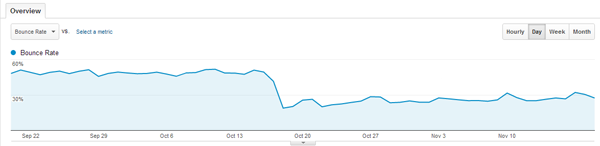
Bounce rate dropped from 47% to 28%, indicating users were engaging with the content instead of leaving before the page even finished loading.
Mobile session duration increased by 31%, a key signal that the site was finally fast and stable enough for users on cellular connections.
Exit rates on product pages fell by over 40%, which directly impacted purchase intent and funnel flow.
The bottom line? Site speed is one of the strongest subconscious signals of trust. When a site is fast, it doesn’t just function better—it feels more legitimate. That trust leads to conversions, repeat visits, and brand loyalty.
Here’s a powerful real-world example: DARTdrones used Kinsta to prepare for the “Shark Tank Effect”—and it paid off. With optimized WordPress performance and zero downtime during a 1M+ traffic surge, they landed $300K from Mark Cuban and expanded to over 48 cities. That’s the kind of impact the best website hosting for small business can make.
Speed = Sales: The Cold, Hard Metrics
While the improved user experience was immediately noticeable, the backend data told the real story—and validated everything we suspected about the impact of site speed on sales performance.
Conversion rate increased by 18% after switching to a high-performance host. This wasn’t tied to a campaign change or new offer—just faster infrastructure. A lower Time to First Byte (TTFB) and improved server response meant fewer drop-offs during page loads and checkout.
Cart abandonment dropped by 22%, largely due to reduced friction at the final step. Checkout pages now load in under 2 seconds (compared to 4–6 seconds before), which is critical, since studies show every additional second in checkout can decrease conversions by up to 7%.
Organic traffic saw a measurable lift, in part because Google’s Core Web Vitals reward fast, stable pages—especially for mobile users. Faster load times led to improved Largest Contentful Paint (LCP) and First Input Delay (FID) scores, helping the site climb in SERP rankings.
GTmetrix scores improved from C to A, with key improvements in TTFB, fully loaded time, and page size. Previously, the homepage clocked in at 3.9 seconds. Post-switch, that dropped to 1.8 seconds—well within the performance thresholds Google favors.
https://www.youtube.com/watch?v=f8w_5A6fgao
How did a minimalist productivity tool generate over $1M in revenue? In this YouTube Video, Rob Hope sits down with Ugmonk founder Jeff Sheldon to unpack the landing page strategy behind Analog’s runaway success. From clean layout choices and compelling copy to a bold 3D animation that replaced their old explainer, you'll learn exactly what made this Shopify page convert so well. Whether you're a designer, copywriter, or founder preparing your next launch, stick around for practical insights you can use to build pages that don’t just look good—they sell.
Don’t Just Take My Word for It—Here’s What the Data Shows
These results aren’t just anecdotal—they’re backed by hard numbers and trusted industry research.
SimpleSEOGroup’s case study shows how a full website redesign—combined with a switch to the best website hosting for small business—can cut a client’s bounce rate from 58% to just 28%. That’s nearly a 30% drop, proving that speed and smart design work hand in hand to keep visitors engaged and on-site longer.
Why This Matters for You
Getting your Time to First Byte (TTFB) under 1 second and Largest Contentful Paint (LCP) under 2.5 seconds can dramatically cut bounce rates and improve conversion.
Improving LCP by a second can boost conversion by 7%–20%, especially critical in mobile checkouts.
A faster site isn't just happier for your visitors—it’s more trusted by Google, which reinforces SEO performance. Better Core Web Vitals translate to better rankings and more organic traffic.
How to Choose the Right Host (If You’re Fed Up Too)
If your website feels slow, glitchy, or randomly crashes under pressure, don’t just keep guessing. Run a performance audit. Use tools like GTmetrix, Google PageSpeed Insights, or Pingdom to pinpoint what’s slowing your site down.
If your bottlenecks trace back to your host—and they often do—here’s exactly what to look for in the best website hosting for small business:
SSD Storage – Hosts that only use SSDs across all plans. If they still offer HDDs, that’s a red flag.
Free CDN & Server-Side Caching – Providers that include a free or integrated CDN (like Cloudflare) and automatic server-side caching—especially for CMS-based sites like WordPress or Shopify.
Transparent Uptime Guarantees – Verified uptime history, automatic alerts, and 24/7 support that’s actually responsive—not just “available.”
U.S.-Based Servers – Hosts that let you choose your data center location—especially if you primarily serve U.S. customers. CMS-Specific Optimization – Hosts that market themselves as “WordPress-optimized” or “WooCommerce-ready,” and provide CMS-aware support teams (not just tier-one generalists).
Scalable Infrastructure – Plans that include autoscaling or easy vertical scaling—especially for growing eCommerce sites.
Featured Best Website Hosting for Small Business: Kinsta
After trying several providers, Kinsta is the one that can deliver real results—both in metrics and peace of mind.
What sets Kinsta apart is not just the numbers, but the reliability they offer. Knowing that my website is in capable hands allows me to focus on other aspects of my business without constant worry about downtime or slow performance.
Their customer support is another highlight. The team is knowledgeable and responsive, ready to assist with any issues or questions that arise, which adds an extra layer of comfort.
Here’s why it’s my top recommendation:
Google Cloud-Powered Infrastructure: Kinsta uses Google’s fastest servers (C2 VMs), which dramatically reduce load times and handle traffic spikes with ease.
Performance-First Architecture: You get a built-in Cloudflare CDN, edge caching, HTTP/3 support, and server-level caching—no extra plugins, no tech headaches.
User-Friendly, Developer-Ready Dashboard: MyKinsta makes it easy to manage everything from staging to analytics, even if you’re not a developer.
Unmatched WordPress Support: From plugin compatibility to database tuning, their team understands WordPress inside and out—and it shows in how smooth things run.
Automatic Scaling & Bulletproof Security: DDoS protection, firewalls, uptime monitoring, daily backups—it’s all included. Also, your site keeps running without missing a beat even with traffic spikes.
https://www.youtube.com/watch?v=ziIifsUv954
Is Kinsta the best website hosting for small business in 2025? In this value-packed review from Dotcom Dollar, you’ll get a live demo, speed test, and expert breakdown of Kinsta’s top features—like Google Cloud-powered performance, built-in security, and a user-friendly dashboard. Stick around for the final verdict, and if you're serious about growing your online business, check out more of Dotcom Dollar’s videos on making money online and building long-term digital success.
When Your Site Finally Works Like It Should
If your website’s been costing you clicks, customers, and credibility, it’s time to stop settling. You don’t need to be a tech expert—you just need a host that delivers.
Choosing the best website hosting for small business isn’t just about uptime or speed. It’s about creating a site that converts, earns trust, and keeps up with your growth.
Run the tests. Check the load times. And if your current host is holding you back?
Switch. Upgrade. Take control.
Your site is more than a page—it’s your business. Power it like one.