We may earn a commission from links you visit through Coupon Snake.
Mold problems rarely start with visible stains. More often, they begin when indoor humidity quietly rises above 40 to 50 percent. At that point, moisture settles into walls, carpets, closets, and furniture, creating an environment where mold can grow unnoticed. Over time, this excess moisture leads to musty odors, recurring mold spots, and ongoing discomfort in the home.
Because of this, effective mold prevention focuses less on cleaning and more on moisture control. A dehumidifier removes excess humidity from the air, helping keep indoor conditions dry enough that mold struggles to survive. Choosing the right unit, however, is just as important as running one.
How Dehumidifiers Prevent Mold
To understand why dehumidifiers work so well, it helps to look at how mold behaves. Mold doesn’t need standing water to grow. Instead, it thrives in air that stays consistently damp. As humidity lingers, moisture slowly absorbs into surfaces—even when they feel dry.
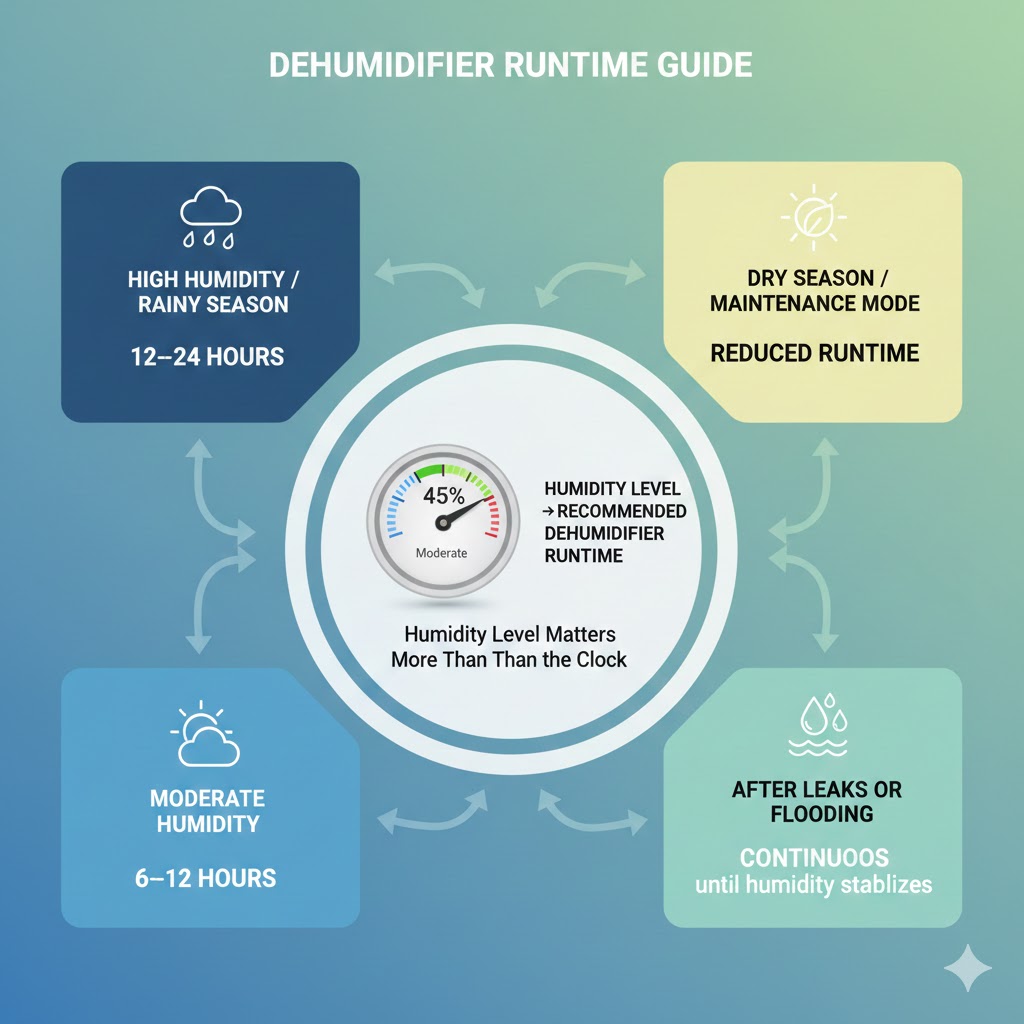
By lowering humidity and keeping it stable, a dehumidifier interrupts that process. Once indoor humidity stays around 45 percent, mold growth slows dramatically and often stops altogether. In practical terms, this means fewer musty smells, drier surfaces, and far fewer chances for mold to return.
In other words, a dehumidifier doesn’t just reduce dampness—it changes the environment so mold can’t easily take hold.
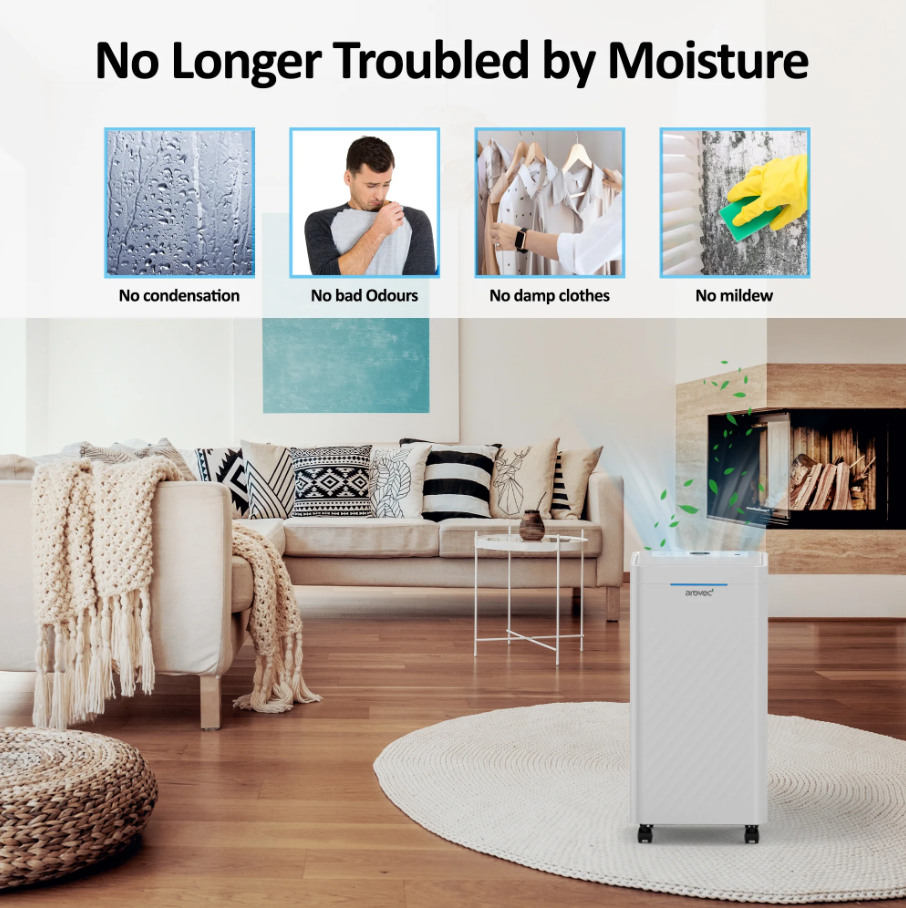
High humidity lets moisture settle on surfaces, creating ideal conditions for mold—this graphic shows how a dehumidifier interrupts that cycle.
Choosing the Right Dehumidifier Size
With the basics in place, the next decision comes down to size. Dehumidifiers are rated by pints, which indicates how much moisture they can remove in a 24-hour period. Selecting the correct capacity is the single most important factor in effective mold prevention.
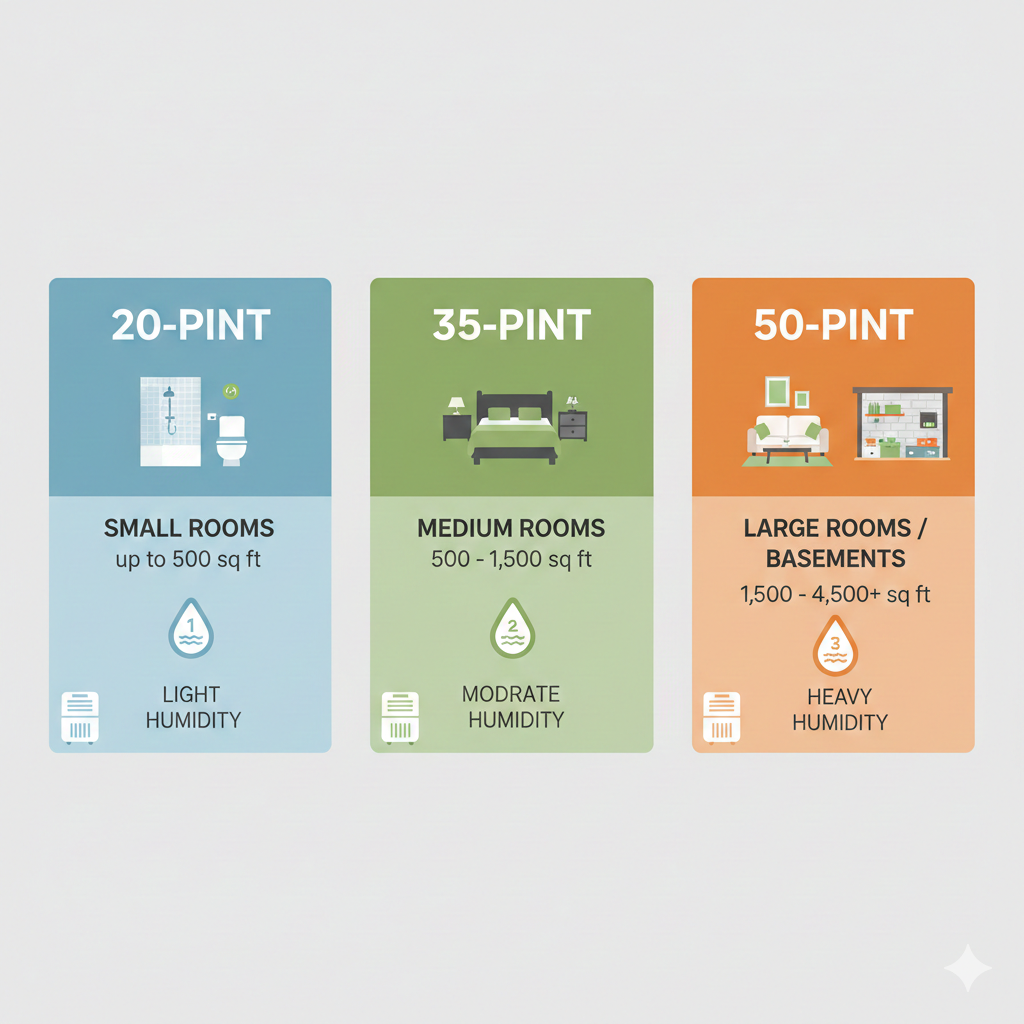
This chart shows which dehumidifier size—20-, 35-, or 50-pint—is best for different rooms and humidity levels, helping you prevent mold effectively.
1. 20-Pint Dehumidifiers
Best suited for small, enclosed spaces with mild moisture issues.
Good for
Small bedrooms
Bathrooms
Laundry rooms
Walk-in closets
If your bathroom or closet feels damp but is less than 150 sq. ft., a 20-pint unit will typically keep it dry. For example, a laundry room where clothes stay slightly damp after washing can be kept mold-free by running a 20-pint unit for 4–6 hours after each load.
2. 35-Pint Dehumidifiers
A balanced option for average-size rooms and moderate humidity.
Good for:
Standard bedrooms
Home offices
Small living rooms
Medium-size apartments
If your basement is around 400–600 sq. ft. with mild to moderate dampness, a 35-pint model usually suffices. It’s also versatile enough to move between rooms if necessary.
3. 50-Pint Dehumidifiers
The most reliable choice for mold prevention in challenging conditions.
Good for
Basements
Large living spaces
Homes with recurring moisture issues
Areas with consistently high humidity
For a 1,000 sq. ft. basement with visible condensation or a history of mold, a 50-pint unit is the safest choice. Units with built-in pumps can continuously drain water into a sink or out a window, keeping the system working efficiently without constant emptying.
Features That Matter for Mold Prevention
Once capacity is right, features determine how effectively the unit maintains consistent dryness over time. While many extras exist, only a few make a real difference.
KEY FEATURES
DESCRIPTION
Auto Humidistat
Maintain a set humidity level automatically, preventing fluctuations that can allow mold to return.
Continuous Drain Option
Allows the unit to run continuously, instead of emptying a water bucket daily—especially helpful in basements or during humid seasons.
Automatic Defrost
Prevents ice buildup on internal coils in cooler spaces, keeping performance consistent.
Energy-Efficient Operation
Help manage long-term costs, as mold prevention requires regular use
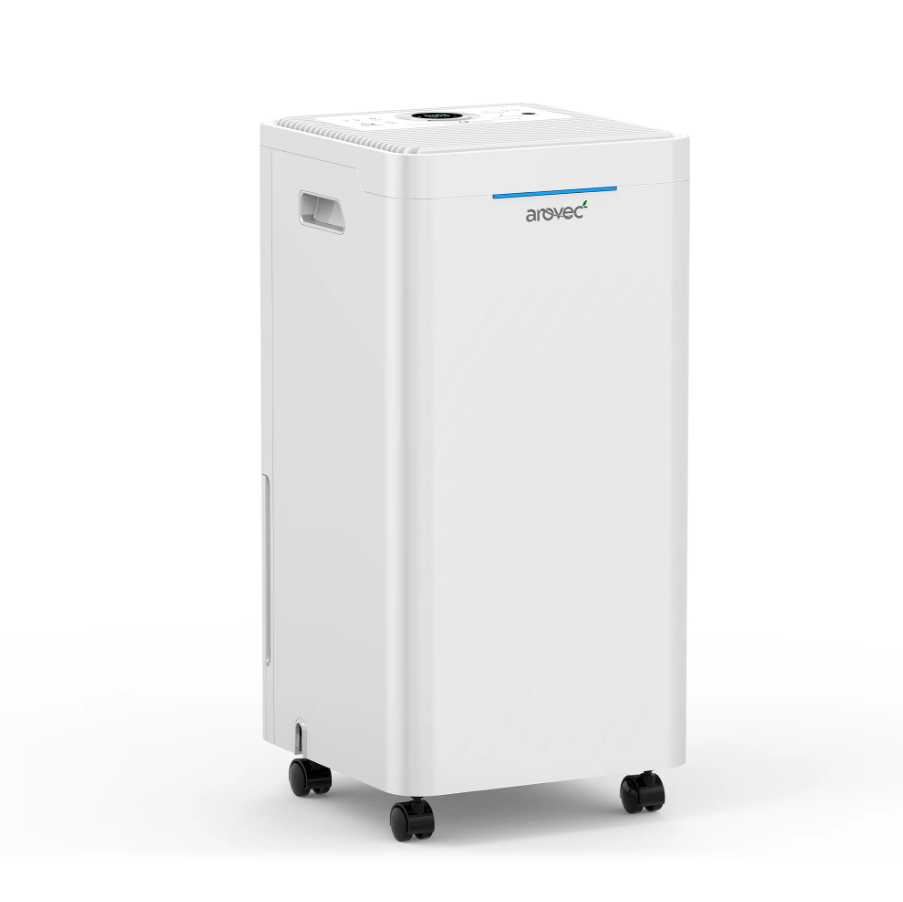
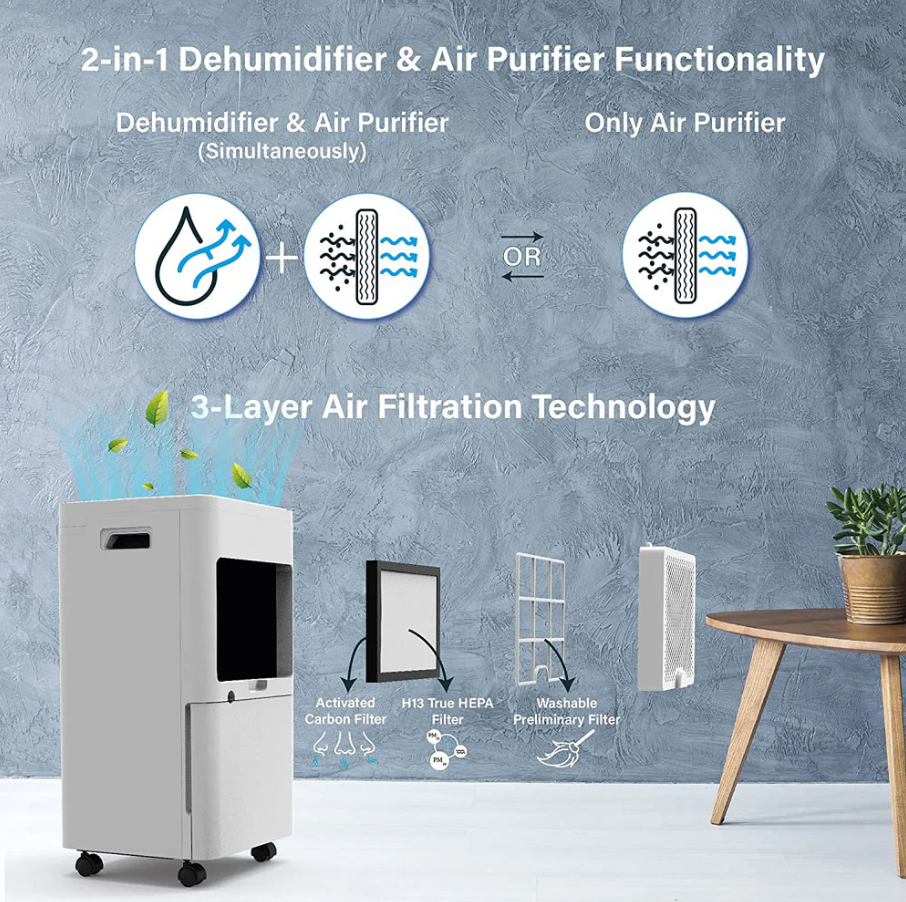
The AROVEC Smart Dehumidifier & Air Purifier 2-in-1 combines intelligent humidity control, continuous drainage, quiet operation, and HEPA air purification—making it one of the best dehumidifiers for preventing mold while improving indoor air quality.
Even the best unit won’t perform well if placement is poor. Fortunately, small adjustments can significantly improve results.
Best Placement
Near the dampest part of the room
At least six inches away from walls
Clear of furniture and fabrics
In basements, positioning the unit near a sump pump or visibly damp corner often delivers the fastest improvement. Proper airflow allows moisture to circulate toward the unit instead of lingering in pockets.
Take Back Control From Mold—Starting With Humidity
Effective mold prevention comes down to one thing—consistent moisture control. Choosing the best dehumidifier for your space ensures humidity stays low enough that mold can’t return, without constant monitoring or effort.
When the right unit is properly sized and set to maintain steady humidity, moisture stops lingering in walls, floors, and fabrics. From there, mold prevention becomes automatic rather than reactive.
Make the choice based on your room size and humidity level, set it once, and let the best dehumidifier do the work quietly in the background. When moisture is under control, mold no longer has a place in your home.